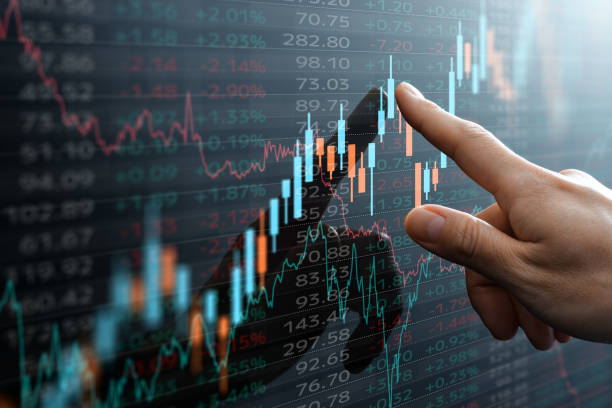
Index trading has evolved into a structured, insight-led activity where decisions are guided by data rather than instinct alone. As global indices reflect the performance of entire market segments, traders increasingly rely on measurable indicators, analytics, and system-driven insights to manage exposure with greater accuracy. In established financial markets supported by professional intermediaries such as an indices broker in Dubai, data-driven index trading has become essential for investors seeking consistency, transparency, and control. By leveraging advanced tools and verified market information, traders can align their strategies with broader economic movements while maintaining discipline across changing conditions.
Data-Centric Market Visibility and Clarity
Effective index trading begins with clear market visibility. Data-driven platforms transform large volumes of market information into structured insights that traders can interpret with confidence.
- Real-time index tracking and metrics
Live price feeds, volume data, and performance indicators allow traders to monitor index movements with precision. This continuous flow of information supports timely decisions rather than delayed reactions. - Historical data for contextual understanding
Access to long-term performance data enables traders to study trends, cycles, and recurring patterns. Historical context helps distinguish between temporary fluctuations and meaningful shifts. - Consolidated market views
Data-driven systems present multiple indices within unified dashboards, allowing traders to compare performance across sectors and regions efficiently.
Enhanced Decision Accuracy Through Analytics
Index trading benefits significantly from analytical tools that reduce reliance on assumptions. Data-driven approaches prioritize evidence, leading to more consistent outcomes.
- Technical indicators for structured analysis
Charts, moving averages, and momentum indicators help traders evaluate index behavior objectively. These tools support rule-based decision-making rather than emotional responses. - Pattern recognition and trend confirmation
Analytical models highlight emerging trends and confirm directional strength. This clarity helps traders align positions with prevailing market momentum. - Reduced the influence of short-term noise
Data filters out irrelevant fluctuations, allowing traders to focus on meaningful price movements that align with their strategy.
Improved Risk Control and Exposure Management
One of the strongest advantages of data-driven index trading is the ability to manage risk systematically. Structured information enables traders to define boundaries and monitor exposure continuously.
- Quantified risk parameters
Data-driven platforms allow traders to measure volatility, correlation, and drawdown potential. These metrics support informed position sizing and allocation. - Real-time exposure monitoring
Traders can track open positions and overall portfolio exposure across multiple indices, helping maintain balance and prevent overconcentration. - Objective exit and adjustment signals
Predefined data-based signals guide exits and adjustments, reducing hesitation during critical moments.
Consistency Across Market Conditions
Markets shift between expansion, contraction, and consolidation phases. Data-driven index trading provides tools that adapt to varying conditions without compromising discipline.
- Adaptive strategy alignment
Data insights help traders modify approaches based on volatility levels and market structure rather than speculation. - Performance benchmarking
Comparing index performance against benchmarks supports objective evaluation of strategies across different cycles. - Stability during uncertainty
Structured data reduces reactive behavior during unpredictable periods, reinforcing long-term consistency.
Execution Efficiency and Operational Control
Control in index trading is closely tied to execution quality. Data-driven environments integrate analytics with execution systems to support precision.
- Informed order placement
Traders use data to time entries and exits more effectively, aligning execution with market depth and liquidity. - Transparent execution feedback
Post-trade analytics provide insight into execution quality, slippage, and timing, supporting continuous improvement. - Streamlined trading workflows
Integrated systems reduce operational friction, allowing traders to focus on strategy rather than process.
Strategic Portfolio Alignment Through Index Data
Index trading often forms part of a broader portfolio strategy. Data-driven approaches support alignment between index positions and overall investment objectives.
- Correlation analysis across assets
Data reveals how indices interact with other instruments, supporting diversification and risk balancing. - Performance attribution insights
Traders can evaluate how index positions contribute to overall portfolio results, improving strategic clarity. - Objective rebalancing decisions
Data-driven thresholds guide portfolio adjustments without reliance on subjective judgment.
Transparency and Trust in Trading Environments
Reliable data fosters trust in trading systems and outcomes. Transparency strengthens trader confidence and supports disciplined participation.
- Clear pricing and data sourcing
Verified data sources and transparent pricing mechanisms reduce uncertainty and enhance credibility. - Auditability of decisions
Data-backed trades can be reviewed and analyzed, supporting accountability and learning. - Alignment with regulatory standards
Data-driven platforms often operate within structured compliance frameworks, reinforcing market integrity.
Platform Capabilities Supporting Data-Led Control
The effectiveness of data-driven index trading depends on the platform through which it is executed. Advanced systems integrate analytics, execution, and monitoring within a single environment.
- Integrated analytics and execution tools
Seamless access to data and trading functions enhances efficiency and reduces decision latency. - Customizable dashboards and alerts
Traders tailor data views to match individual strategies, improving focus and responsiveness. - Scalability for evolving strategies
Platforms support increasing complexity as trader experience and objectives grow, maintaining performance consistency.
Structured Market Participation Through Technology
Technology plays a critical role in transforming raw data into actionable insight. A robust indices trading platform enables traders to convert information into controlled execution.
- Automated data processing
Systems process large data sets quickly, delivering insights that manual analysis cannot replicate. - Consistent rule-based execution
Technology supports adherence to predefined strategies, reducing deviation caused by emotional bias. - Continuous performance feedback
Ongoing data analysis allows traders to refine strategies based on measurable outcomes.
Conclusion
Control in index trading is ultimately shaped by the quality of insight behind every decision. Data-driven approaches allow traders to move beyond surface-level market signals and engage with indices through measurable trends, verified analytics, and structured execution processes. By grounding strategies in reliable data, traders gain the ability to manage exposure proactively, respond to shifts with confidence, and maintain alignment with broader market dynamics rather than reacting to short-term fluctuations.
In this context, Skyriss supports a disciplined index trading experience by combining advanced analytical capabilities with a stable, transparent trading infrastructure. Through its focus on data integration, platform reliability, and professional market access, Skyriss enables traders to translate complex index movements into actionable strategies. This commitment to informed execution and operational clarity reflects how data-driven index trading continues to empower investors seeking consistency, precision, and long-term control in dynamic global markets.