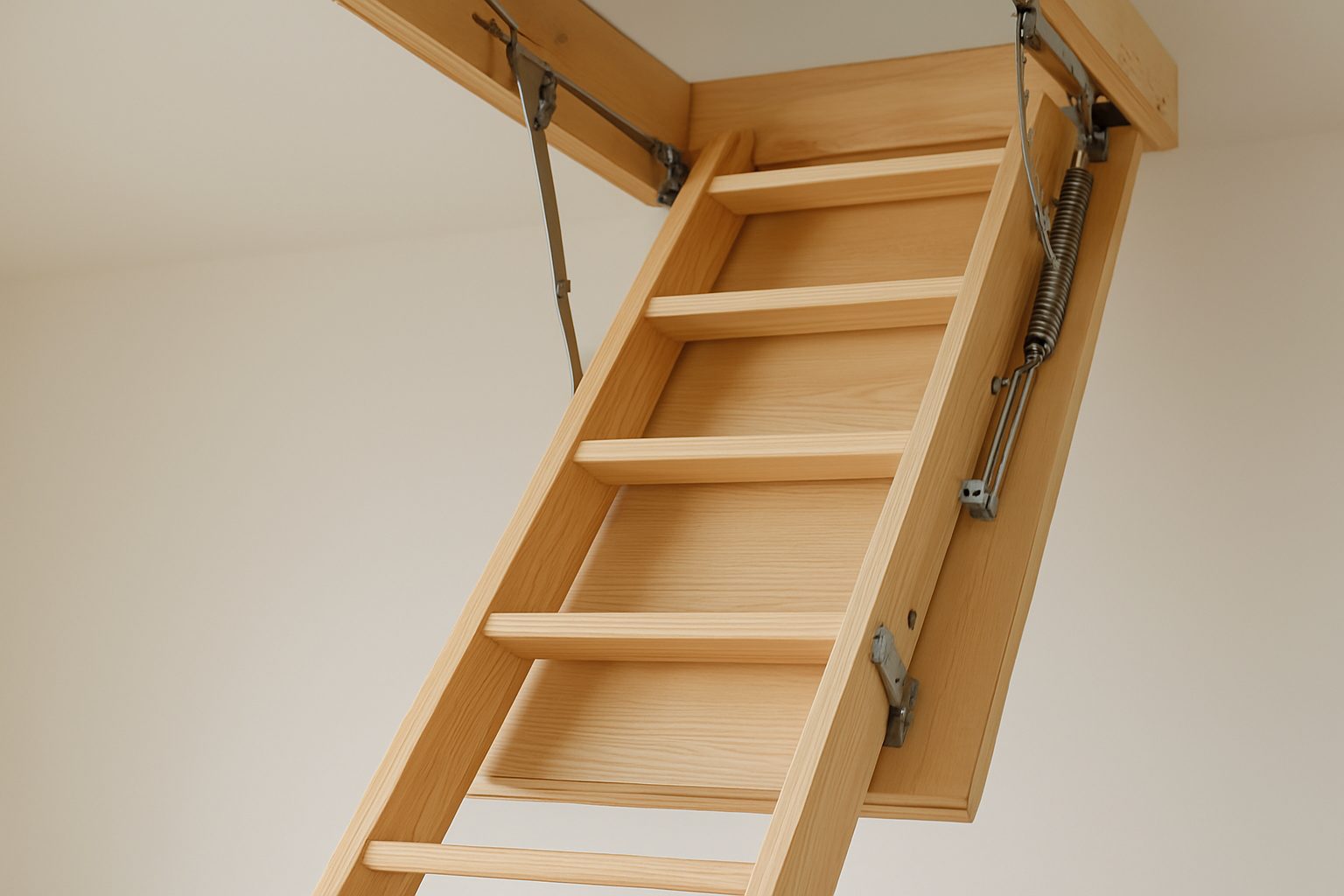
Installing a quality loft ladder is an investment. Like any moving mechanical system in your home, it performs best—and lasts longest—when it receives consistent, straightforward maintenance. Neglect, on the other hand, accelerates wear and introduces safety risks that could have been avoided entirely.
Most homeowners who invest in good-quality loft ladders assume that once the installation is complete, the job is done. In reality, a simple maintenance routine every six months can extend the life of the product significantly and catch problems before they become hazardous.
What Does Routine Maintenance Actually Involve?
Maintenance doesn’t require specialist tools or technical expertise. The following checks take under 30 minutes and should be carried out twice a year:
Hinge lubrication: Apply a dry lubricant or appropriate oil to all pivot points. Avoid WD-40 on timber ladders, as it can degrade the wood over time.
Tread inspection: Check each tread for cracks, splits, or worn anti-slip surfaces. Replace individual treads where damage is localised.
Fastener tightening: All bolts, screws, and frame fixings should be checked and tightened as needed.
Locking mechanism test: Deploy and retract the ladder several times to confirm the locking arms engage fully and release cleanly.
Hatch seal check: On insulated models, inspect the perimeter seal for compression loss or visible gaps.
What Are the Most Frequently Asked Maintenance Questions?
How often should a loft ladder be inspected?
Twice a year is the standard recommendation—once before summer and once before winter, when temperature fluctuations affect timber and metal components most noticeably.
What type of lubricant is best for loft ladder hinges?
A silicone-based dry lubricant is suitable for both timber and aluminium ladders. It reduces friction without attracting dust or degrading surrounding materials.
How long should a well-maintained loft ladder last?
A quality loft ladder, properly installed and regularly maintained, should last 15 to 25 years. Premium timber models often last longer when kept in a well-ventilated, low-humidity loft environment.
What causes loft ladders to become stiff or difficult to operate?
Stiffness typically results from dried-out or corroded hinges, misaligned frame fixings, or a swollen hatch frame caused by humidity changes. Each has a straightforward remedy when caught early.
Can I replace individual components, or does the whole ladder need replacing?
In most cases, individual components—treads, hinges, locking arms—can be sourced and replaced separately. Contact the manufacturer with the model number to confirm parts availability.
What are the signs that maintenance alone won’t fix the problem?
If the hatch frame is visibly warped, if the structural fixings have pulled away from the ceiling, or if multiple components are failing simultaneously, a full replacement is likely the more cost-effective solution.
Does humidity in the loft affect the ladder’s condition?
Yes. Excessive humidity accelerates corrosion in metal components and can cause timber to swell or crack. Improving loft ventilation reduces these risks considerably.
Should a professional carry out maintenance checks, or is it something I can do myself?
Basic maintenance tasks—lubrication, visual inspection, tightening fasteners—are well within the reach of most homeowners. Structural concerns or mechanical failures warrant a professional assessment.
What is the cost of maintaining a loft ladder annually?
Routine maintenance costs are minimal—primarily the cost of lubricant and any replacement treads. Budget approximately £20 to £50 per year for consumables, with occasional professional inspection every three to five years.
Small Effort, Long-Term Reward
A six-monthly maintenance check is one of the lowest-effort, highest-return habits a homeowner can adopt. It keeps the ladder operating smoothly, preserves the structural integrity of the installation, and—most importantly—ensures that every trip up to the loft is a safe one. Don’t wait for a problem to become obvious before taking action.